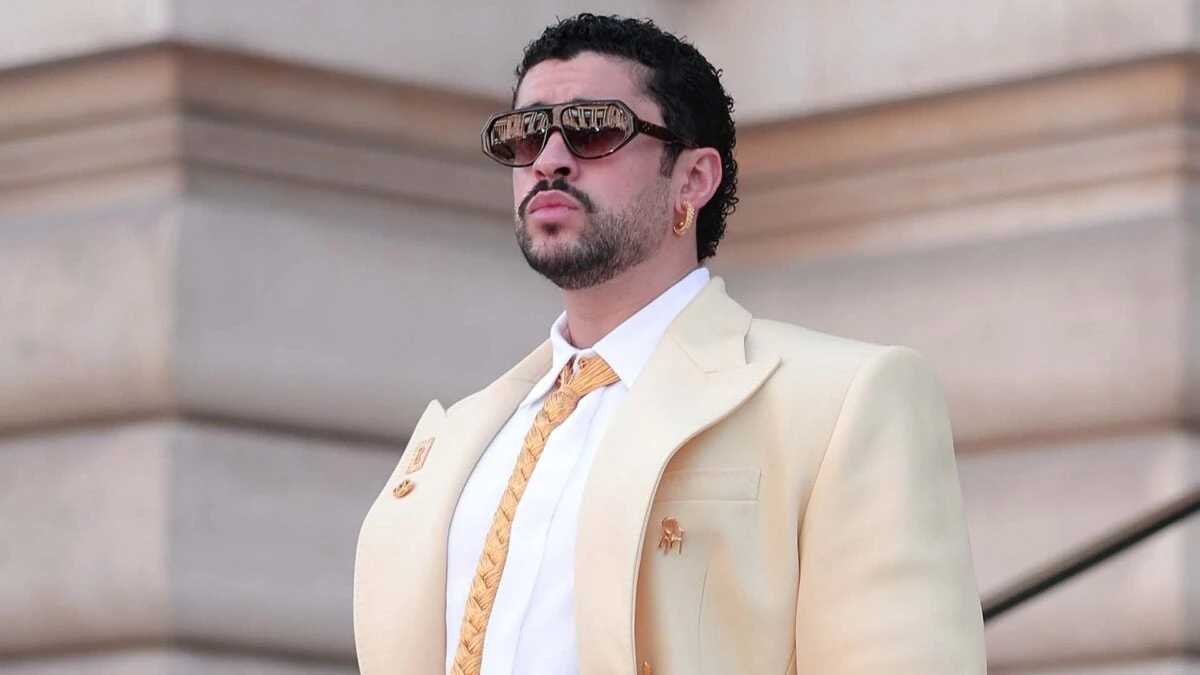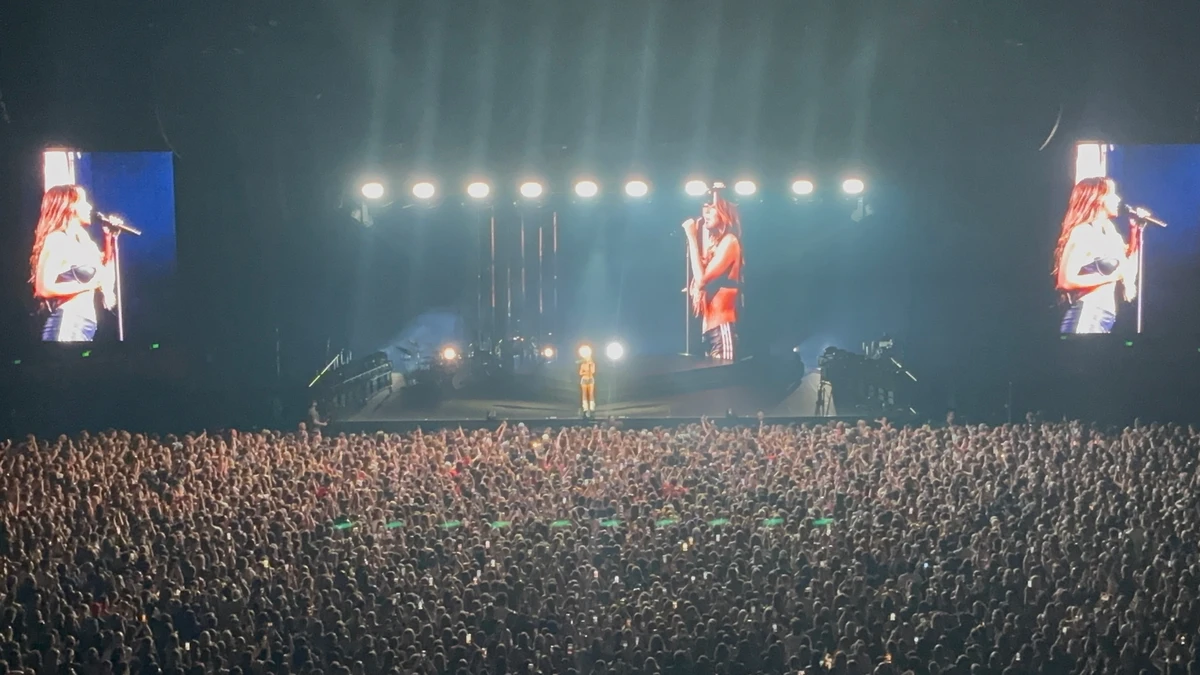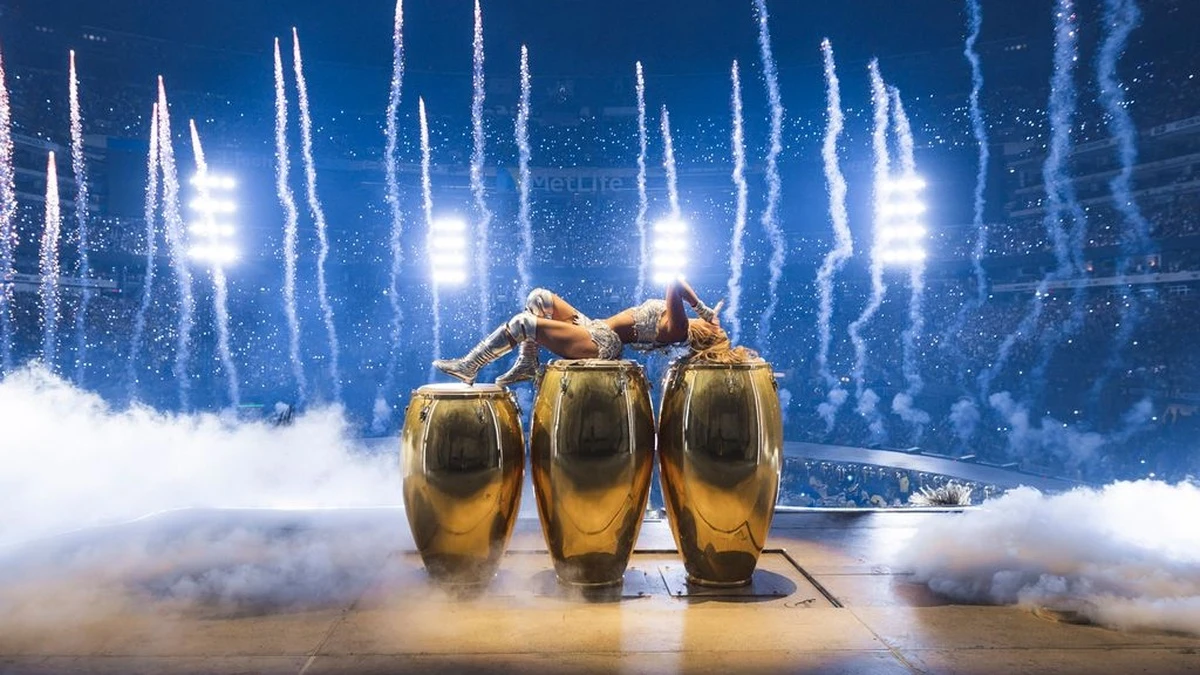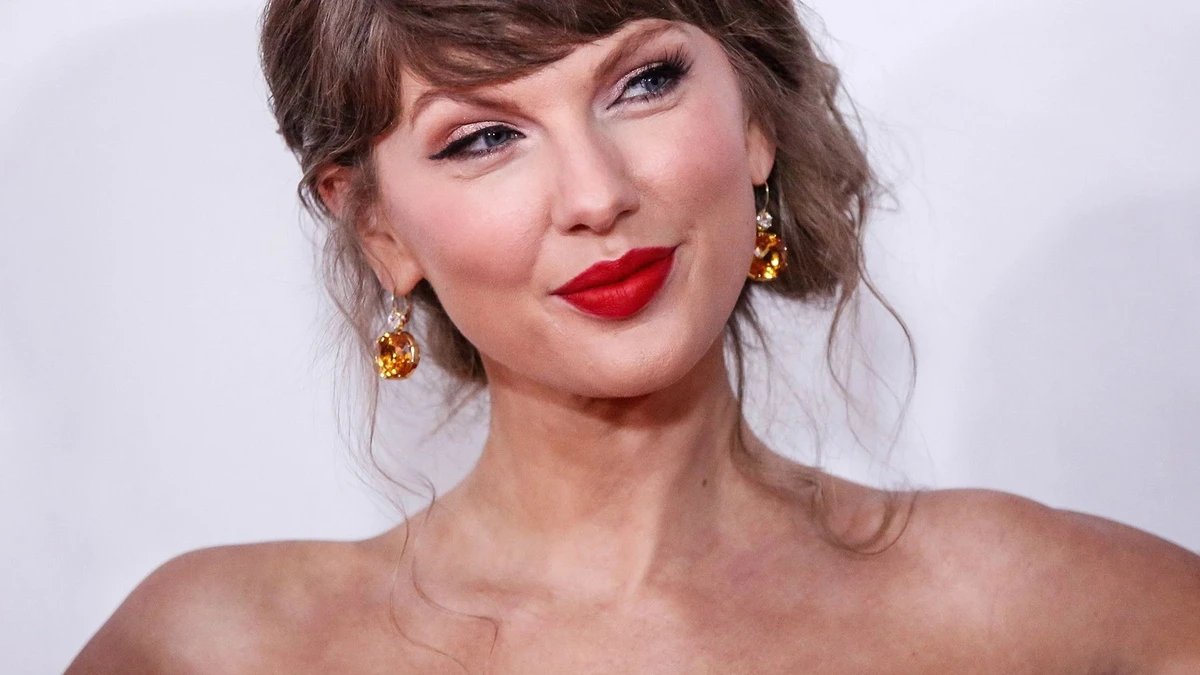

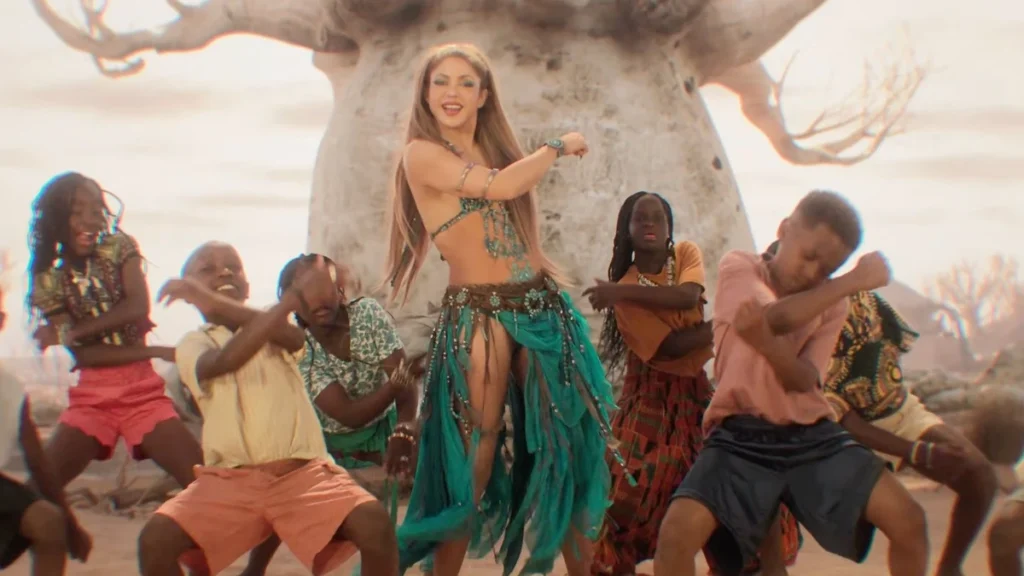
A still from the Dai Dai video.
A still from the Dai Dai video.
A song does not usually enter a global chart at No. 166 and end up at the top of it. That is what Dai Dai has done. The Shakira and Burna Boy track debuted on Billboard’s Global Excl. US chart at 166 on the chart dated 30 May, first reached No. 1 on 4 July, and is at No. 1 again this week, fifteen weeks after it arrived.
The shape of that run is more interesting than the destination. Most tracks that reach the top of a global chart do it on release week, powered by a fanbase converting a pre-save into a stream on day one. This one climbed for five weeks before it got there, and then stayed.
A Debut at 166 Is Not How This Usually Goes
Chart entry position is a decent proxy for how a release was engineered. A high debut means the audience was assembled in advance. A low debut that climbs means the song found listeners after the marketing push rather than during it.
Billboard’s own chart data records the debut at position 166 on 30 May, two weeks after the single arrived on 15 May. For a track fronted by two artists of this scale, that is a strikingly modest start, and it tells you the release was not built around a first-week spike.
The peak came on the chart dated 4 July. Between those two dates the song moved through more than 160 positions, which is the sort of climb that only happens when something outside the release schedule is driving repeat plays.
Fifteen Weeks and Still at the Top
The current entry shows fifteen weeks on the chart, last week at No. 1, peak No. 1. Holding the position rather than spiking and falling is the part that matters commercially, because a chart-topping week converts to a very different royalty picture than a chart-topping day.
It also says something about how the song is being consumed. A track that stays at the top for a sustained run is typically being played in contexts the listener does not choose track by track, which for a tournament song means broadcast, stadium, highlight package and social clip as much as playlist.
The chart in question excludes the United States, which is worth noting rather than treating as a footnote. The Global Excl. US chart measures the rest of the world, and a football-anchored release is exactly the kind of record that performs differently on either side of that line.
Who Actually Wrote It
The credits on Billboard’s chart listing are the detail most coverage skipped. The songwriters are given as Shakira, A. Castillo Vasquez, A. Saghir, E.C. Sheeran and J.D. Bellion. The producers are listed as A.C. and Shakira.
Two of those songwriter credits are recognisable. E.C. Sheeran is Ed Sheeran; J.D. Bellion is Jon Bellion, a writer and producer whose credits sit across a decade of pop records. Putting both in the room for a tournament single is a considerably more deliberate pop-writing move than the format usually gets.
Shakira taking a production credit alongside A.C. is the other thing worth flagging. She is not a guest vocalist on a work-for-hire commission here; she is inside the build, which is consistent with how she handled her previous tournament song.
The arrangement reflects that room. The track carries Burna Boy’s rhythmic vocabulary against a Latin pop chassis, and the result sits closer to a contemporary Afrobeats-leaning pop single than to the anthem template a governing body might have specified.
What a Tournament Song Has to Do
An official tournament song has an unusual brief. It has to work in a stadium at volume, survive being cut into fifteen-second highlight packages, be singable by people who do not speak the language of the verse, and remain tolerable across a month of repetition.
Those constraints usually push a song towards a chant, and a chant usually costs it a life outside the tournament. The chart run here suggests Dai Dai has avoided that trade, because a song that only worked as a stadium chant would not still be at the top of a global chart in September.
Some of that is structural. A repeated two-syllable hook is easy to carry across a crowd, and pairing a Colombian and a Nigerian vocalist gives the record two distinct rhythmic centres rather than one, which keeps it from settling into a single groove for its whole length.
Afrobeats-derived rhythm has become a default setting for records built to travel, and the site has covered how those grooves get assembled elsewhere, from an Ivorian instrumental built the same way upward. The difference here is scale rather than method.
The Video and the Cameos
The video followed on 23 May, eight days after the single. Billboard described it as a globe-spanning visual and noted cameos from Lionel Messi and Kylian Mbappé alongside a number of other players.
Casting footballers rather than dancers in a football song is obvious, but it is also a distribution decision. Each cameo gives the clip a second life on that player’s own channels, and the combined reach of the athletes in a video like this comfortably exceeds the reach of the artists.
The visual itself leans on the same globalist framing as the audio, which is the point of the commission. FIFA’s brief was a celebration of football, culture and unity, and the clip is built to be legible with the sound off.
Where the Royalties Go
The commercial arrangement is not standard. According to FIFA’s own release, royalties from the song support the FIFA Global Citizen Education Fund, which is targeting USD 100 million by the end of the tournament to provide children with access to education and football.
That changes how the chart run should be read. Fifteen weeks at or near the top of a global chart is a meaningful revenue event, and in this case the revenue is directed rather than distributed in the usual way.
The single was released through Sony Music Latin and went to all major streaming platforms on day one, with no windowing. For a charity-directed release that is the correct call, since every restriction on availability is a restriction on the fund.
What Sits Beneath It on the Chart
The company Dai Dai is keeping is a reasonable measure of the achievement. Below it this week sit Tame Impala’s “Loser” at No. 2, a Justin Bieber and Nicki Minaj track at No. 3 in its twentieth week, a BTS single at No. 4 in its twenty-third, and Ariana Grande at No. 5.
That is a top five made up of established global acts with deep catalogue audiences, and holding position above them for a sustained run is not something a novelty release manages. Billboard’s coverage of the video in May treated the song as a tournament tie-in; the chart has since treated it as a pop single.
The tournament itself supplies a hard deadline for the run. Interest in an official song historically falls away sharply once the final is played, so the question the next few chart weeks answer is whether the record has built an audience that outlasts the fixture list. On a debut of 166 and a climb of five weeks, it has at least earned the audience the slow way.
About Author