
George Voukanos Assembles Terra Olympia, an Olympic Score Moved From the Orchestra to the Synthesizer
A Greek Composer Known for Symphonic Works Rebuilds an Olympic Cycle in Synthesizers
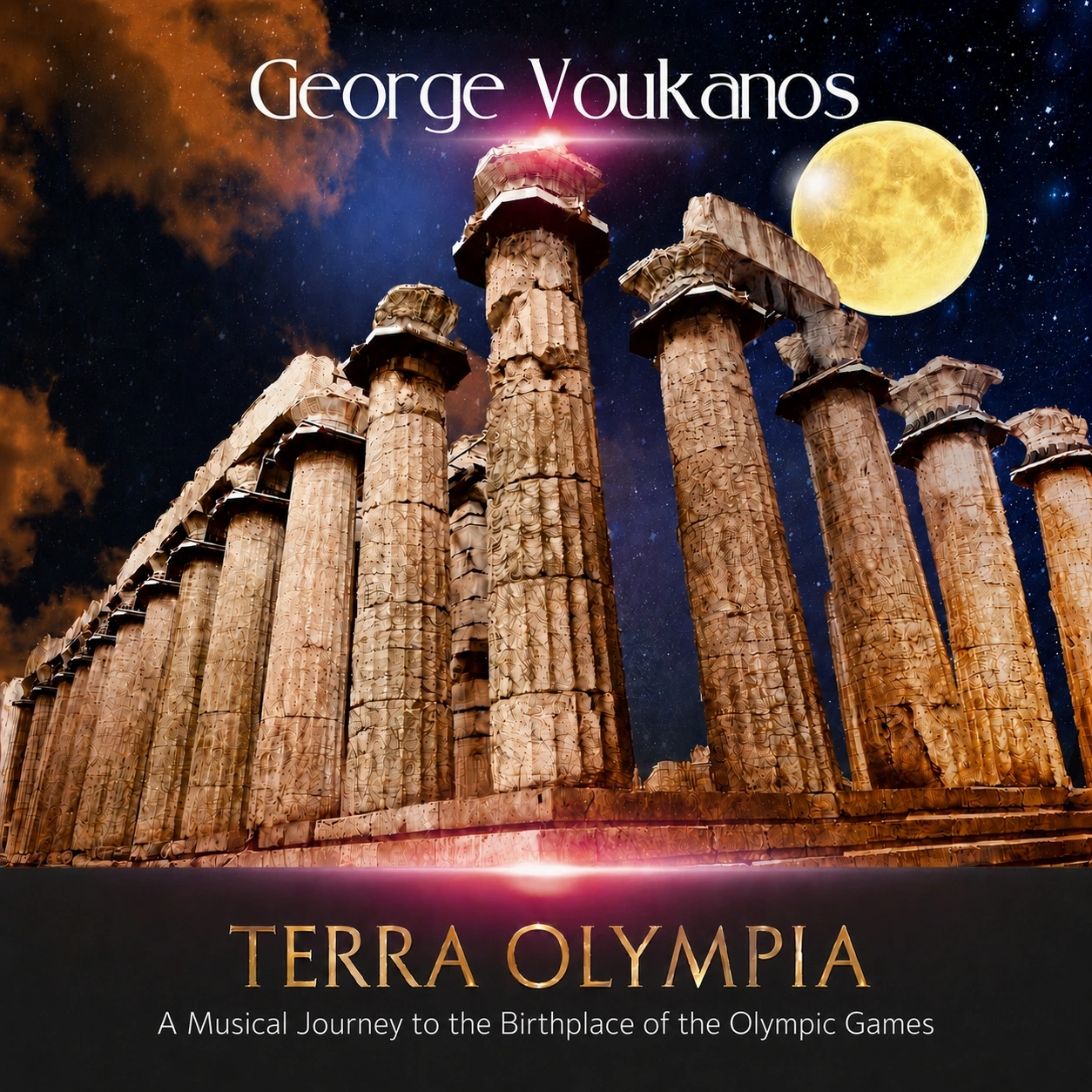
The title track of Terra Olympia runs just over four and a half minutes. Its credits list synthesizer, programming and keyboards, with no orchestra anywhere on the sheet. That is a telling choice for George Voukanos. The Greek composer’s symphonic works have reached the Athens Concert Hall and the Herod Atticus Theatre. Melody Spirit Records released the 12-track instrumental album worldwide on 14 August 2026. It is where that orchestral career meets electronic music.
George Voukanos’s Terra Olympia is in the playlist below, and the composer’s full run of coverage sits on the George Voukanos profile. The album came to this desk through PopHits.Co Music Charts. That programme verifies independent artists and places their releases across its network of music news titles. Listen there first, then keep reading for how the record was built.

George Voukanos Wrote Symphonic Works for More Than Two Decades Before Terra Olympia Went Electronic
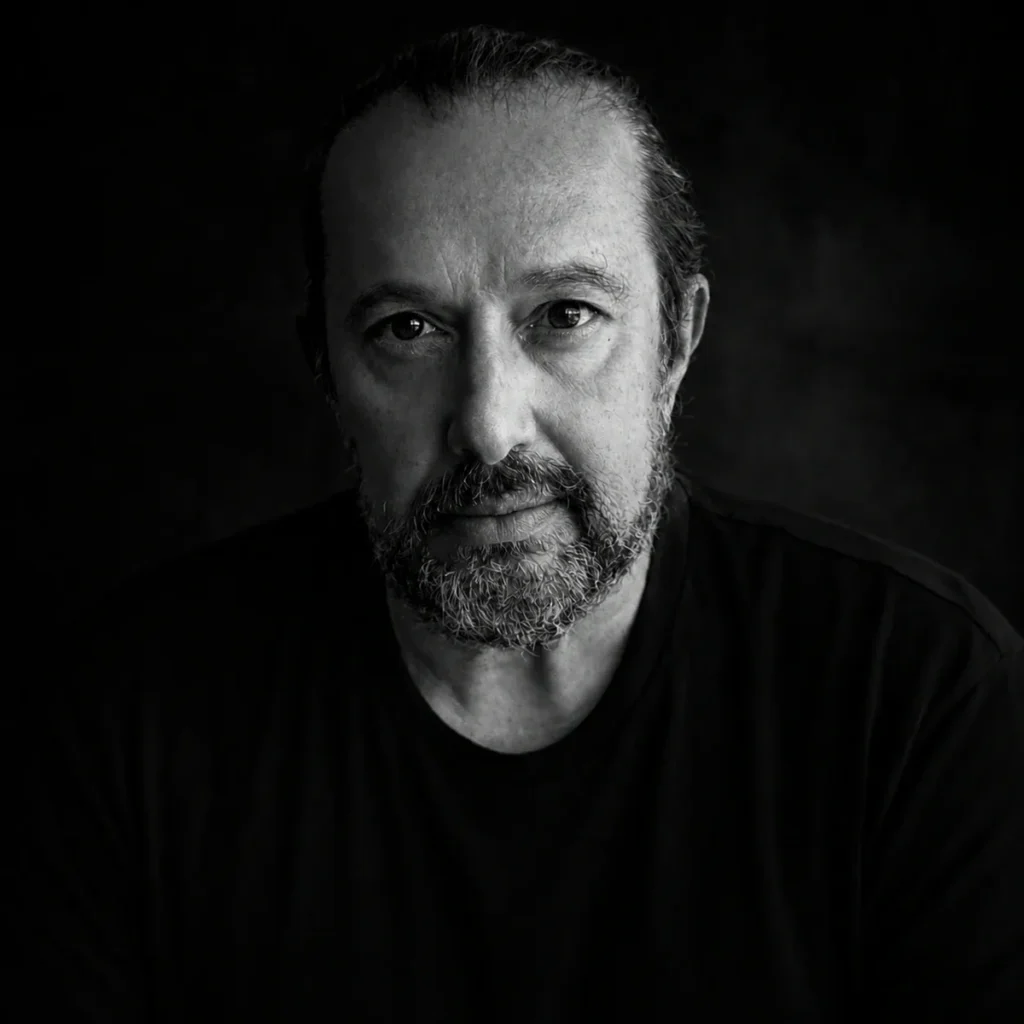
Music arrived early in the composer’s life, through piano, monody and Byzantine chant. Voukanos grew up in the Athens district of Ampelokipoi. At home, the father sang Asia Minor and folk songs, and the grandfather was a church cantor. Formal study followed at several Athens conservatories, with diplomas in Byzantine music, monody, piano and theory.
From there the work turned symphonic. In 2000, the Athens Concert Hall hosted the first symphonic poem, Jubilee. Two years later came Areton Anotera, a symphonic work for the Olympic Games. The National Symphony Orchestra and the choir of Greek broadcaster ERT premiered it there on 5 June 2002. Then in October 2003, the Athens Festival staged the symphony Child Visions at the Herod Atticus Theatre.
The orchestral music has kept travelling since. In 2025, the Camerata orchestra of UNAM premiered Sor Juana The Tenth Muse in Mexico. Chinese television also broadcast a selection from the opera Prometheus. This year, Areton Anotera also reached Olympic Week in South America. Paraguay’s National Symphony Orchestra and the National Youth Orchestra of Sodre in Uruguay both took it up. Meanwhile, audiences in Japan heard excerpts from a new opera about the writer Lafcadio Hearn.
Terra Olympia Began as a 2004 Soundtrack and Returned as a 2017 Stage Work at Elis
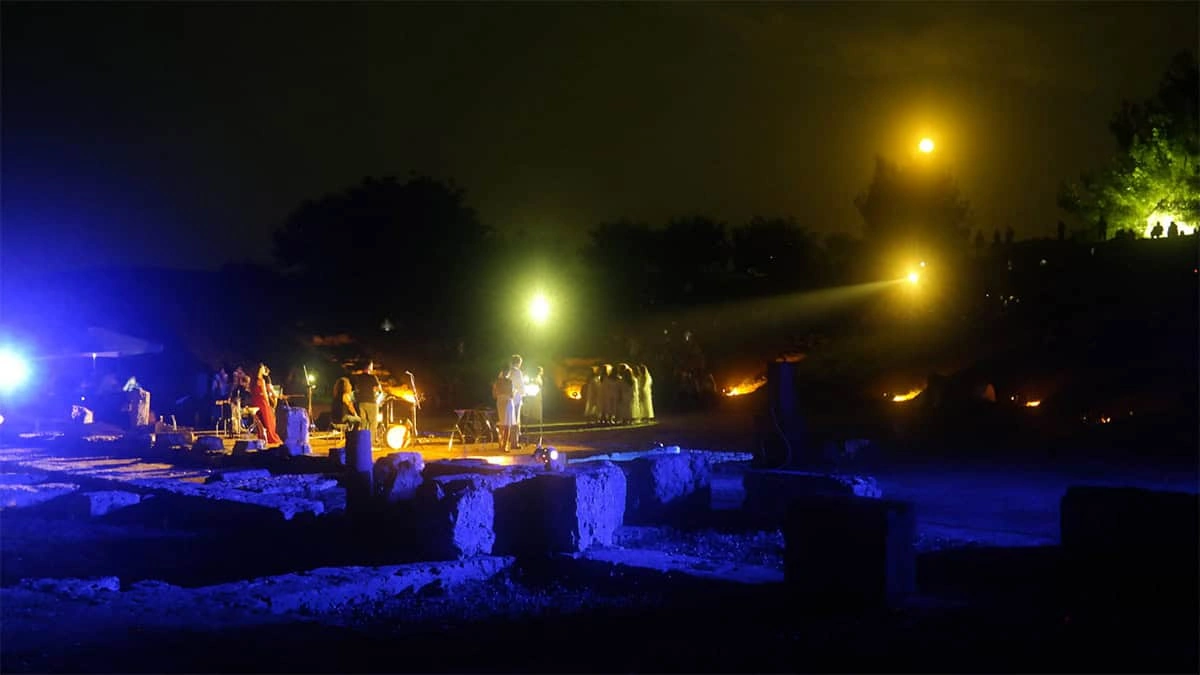
Terra Olympia sits inside that history rather than outside it. Voukanos first wrote a film soundtrack under that name in 2004. Its performance took place at the Ancient Stadium of Olympia. In 2017 it returned as an audiovisual stage work at the Ancient Theatre of Elis. The 2026 album is the third form of the same idea. It also belongs to an Olympic cycle alongside Areton Anotera and Eternal Games.
Speaking to the Greek-American daily Ethnikos Kirikas in September, Voukanos said Terra Olympia should look forward as well as back. The goal was to hear that world today, in a contemporary orchestral and cinematic language.

The Arrangement of Terra Olympia Keeps a Symphonic Habit, One Long Statement and Then Short Scenes
That background shows in the running order. The title track comes first and runs longest, so it sets out the full palette before the story starts. An overture does the same job. Then The Myth Begins lasts under two minutes. Its credits name a singer, Artemis Gonou, for vocals and backing vocals.
After that, the album moves through the region as a sequence of scenes. The Dawn of Elis runs just over three minutes. Next, The Dance of the Mythical Rivers of Ilia lasts three and a half. The pieces then tighten. Sacred Neda, Heracles and the Centaurs of Foloi, The Sacred Road and Sacred Olive Trees in Ancient Olympia each run about two minutes. Each title names a real place or story, from the Neda river to the oak forest of Foloi.
The final stretch turns from the land to the Games. The Heartbeat of Heroes reaches three minutes, and The Dance of Champions and Olympic Glory follow. Finally, Journey into Myth and Eternity closes the record at around three and a half minutes. In total, the 12 tracks run about 32 minutes.
For a composer used to symphonic poems, that shape is familiar: a statement, then a set of movements. Here, though, short scenes replace the long movements. That is also why the album sits so naturally next to film and television.

In the Mix, One Composer Plays Every Part the 2017 Stage Version Gave to an Ensemble at Elis
The credit sheet tells the rest of the story. On the title track, the credits name George Voukanos as performer and on synthesizer, programming and keyboards. The same name covers vocals, background vocals, arrangement, production and music direction. As a result, no session player takes a part and no orchestra balances against the electronics.
The 2017 stage version worked the other way round. There, Voukanos played piano alongside Tryfonas Tryfonopoulos on electric guitar, Margarita Theofilopoulou on trumpet and Symeon Konstantinidis on percussion. The soprano Ada Athanasopoulou sang, and Chrisa Roma narrated. On the album, however, the patches themselves have to carry the difference between those instruments. Layering, register and the build of each arrangement now do the work an ensemble once did.
Importantly, the synthesizers are not standing in for strings or brass. The album treats them as instruments in their own right. That is the clearest break from the orchestral writing that came before.
Two earlier records help place the result. Fans of Kitaro will think of the Silk Road soundtrack from 1980. There, synthesizers carried a television documentary along an ancient trade route. Similarly, listeners who know Brian Eno and Apollo: Atmospheres and Soundtracks from 1983 will recognise a related idea. Eno recorded it for a documentary about the Apollo missions.
Where to Hear George Voukanos and Terra Olympia, From Spotify and Tidal to a Planned Live Show
From the TopMusic.News Curator Team: “Play Terra Olympia straight through, in order. The composer built it like a symphonic poem. So the short scenes make the most sense as one continuous 32-minute piece.”
For listeners interested in cinematic instrumental music, Greek mythology and the Olympic Games, Terra Olympia is a focused place to start. The composer’s Olympic cycle also has Los Angeles 2028 on its horizon.
The next step is the stage. With collaborators and the Virtual Electro Band, Voukanos is planning a live version. It would combine an orchestral and vocal ensemble with electronics, lighting and video mapping. A new opera about Lafcadio Hearn, with a libretto by the writer Effie Panagopoulou, is also due in Thessaloniki.
Hear the album in the Spotify player at the top of the page. You can also stream Terra Olympia on Apple Music, Deezer, Tidal and YouTube. Earlier recordings by the composer sit on the Apple Music artist page. Follow George Voukanos on Spotify, Instagram, Facebook and X.




About Author