

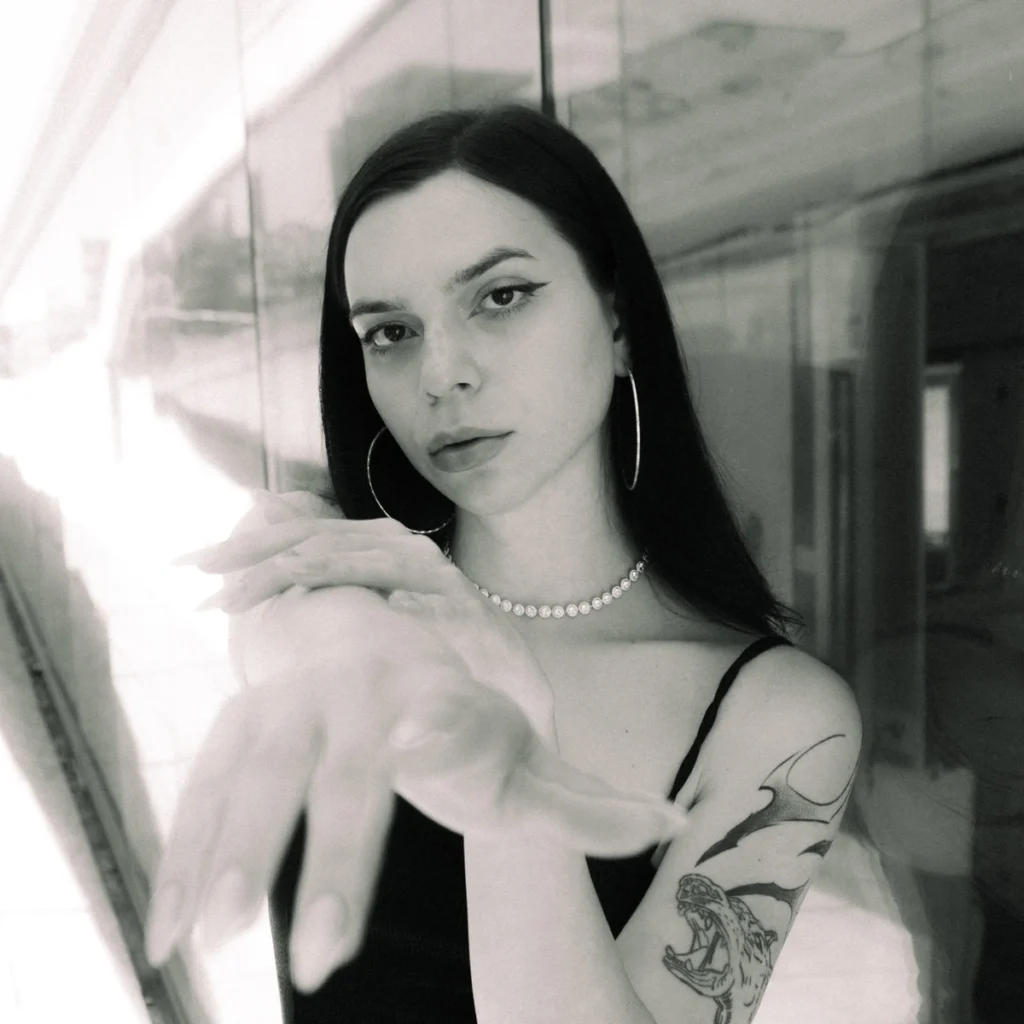
How Cosvar Built Exuvia, an Eight-Song Album That Sheds a Skin in Under 20 Minutes
A Romanian Producer’s Album Runs From Under the Skin to the Magazine Cover
Exuvia, an eight-track electronic album, opens on a vow and closes on a magazine cover. Its first song begins with four lines of self-belief, among them “my own creation”. Then Cover Girl, less than 20 minutes later, ends on the promise to “be someone”. Cosvar, an electronic artist based in Timișoara, Romania, released Exuvia as a full album on 18 June 2026.
Cosvar’s Under My Skin opens the playlist below, alongside this desk’s IDM and avant-garde electronic picks, and her coverage is collected on her artist profile. Exuvia reached this desk through PopHits.Co Music Charts, which verifies independent artists and places their releases across its network of music news desks. Press play, then read on for how the album is put together.

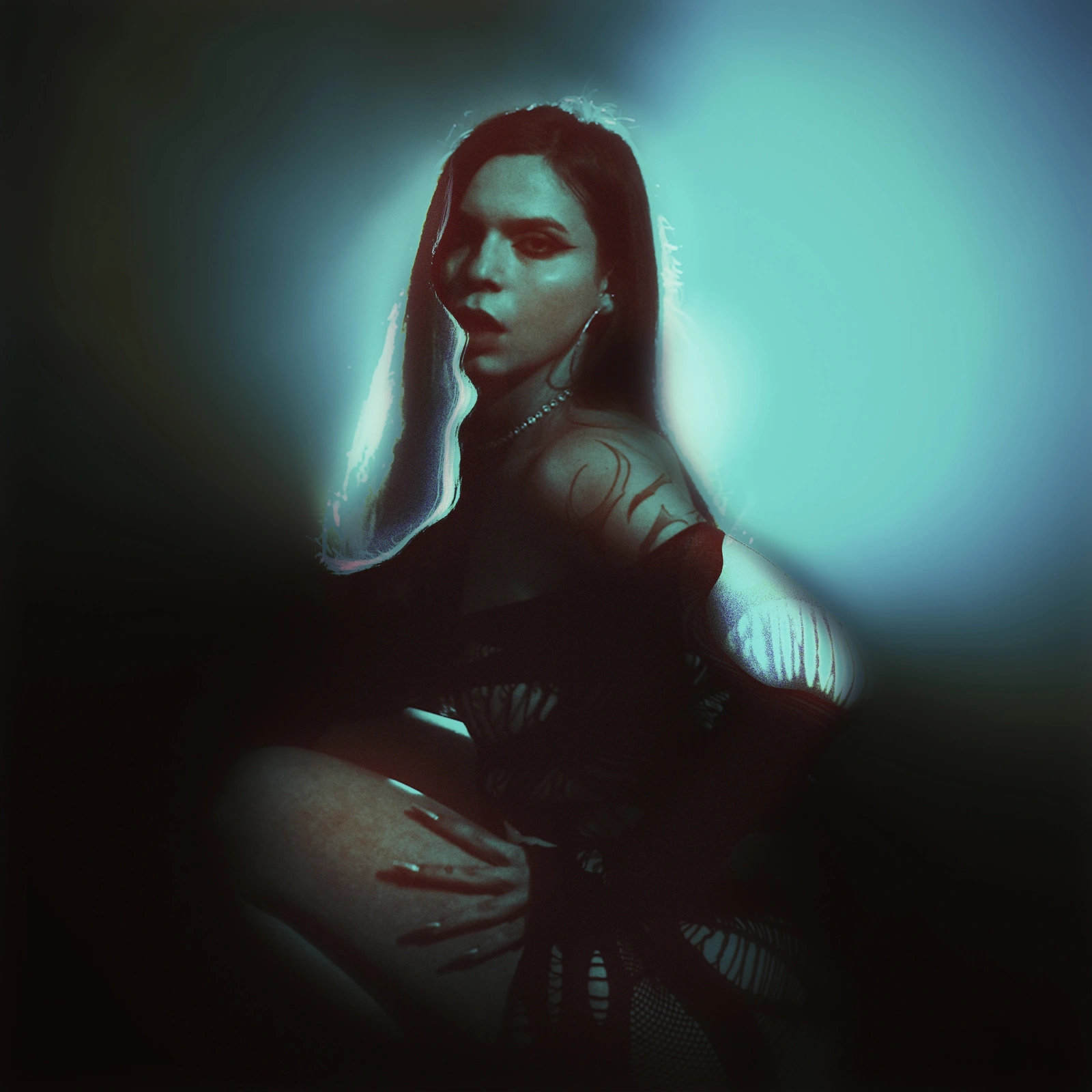
Back to that opening vow, because the title explains the plan. An exuvia is the shell an insect or a spider leaves behind when it moults. It is the old skin that no longer fits. Cosvar builds the record around that image, and the opening song states it as a ritual of self-making. The moon is a mother, the sun is a father who obeys, and the body is a vessel that carries “forgotten rituals”. Its refrain sits right on the theme, “under my skin”, repeated until it works like a pulse.
That song was the album’s first public piece. Under My Skin came out on 16 March 2026, three months before the full record. It also set the terms for everything after it: a narrator who does not ask permission. Cosvar, credited as Cosmina Varodi, wrote its words and music, produced it and sings it herself. Her stage name joins the first syllables of that name.

Cosvar Writes the Exuvia Album in English and Romanian, With Skin and Fire as Its Thread
Inside the record, the language tells its own story. On her 2023 debut, Xenosânge, she sang almost entirely in Romanian, with Soul Tie the one English song. On Exuvia the ratio flips. Seven of the eight songs are in English, and only Latex stays in Romanian.
The images carry over, though. The debut already had a skin of metal in Piele De Metal and a lover who tears that skin away in Metal Elastic. It also had fire in Flacără and Ardem Împreună, whose titles mean flame and we burn together. Exuvia keeps both threads. So Gasoline asks to be lit up and burned down with “no in-between”, and On Fire follows it. Latex, meanwhile, names a second skin outright.
Who Holds the Power on Exuvia
What changes is who holds the power. Healer still looks for shelter in the dark. But Stripper shuts the door on a liar who comes back in the middle of the night, and its chorus is about getting paid. In Latex, the one Romanian song, the narrator calls herself the queen of the night, not one of the crowd. By Cover Girl she is walking into the rooms where she once got burned.
Romanian dance music has crossed borders before. Inna changed her stage name in 2008 to one that was easy to remember. Her debut single, Hot, then topped the Romanian charts that winter. In early 2010 it also reached No. 1 on the US Hot Dance Airplay chart, as Romanian popcorn songs travelled abroad. Cosvar’s choice is more personal. She uses English for most of the album, and Romanian for the one song where she crowns herself.


Eight Tracks of Three Minutes or Less Give the Exuvia Album by Cosvar Its Shape
The structure is as tight as the lyric is bold. No song passes three minutes. Latex is the longest at exactly three, and Cover Girl the shortest at two minutes and two seconds. In total the album runs 19 minutes and 47 seconds. That is club length, made for a dance floor rather than a long sit-down listen. It also fits an artist whose catalogue already carries club edits of Ardem Împreună and Piele De Metal.
The running order traces the moult. It opens under the skin, then moves through love and fire with Healer, Gasoline and On Fire. Next it turns nocturnal with Stripper, Latex and Daddy, a track that calls its lover a retro fantasy. Finally it lands on the new surface of Cover Girl, leaving the old skin behind on the way.
She also keeps the work in her own hands. On the debut, she wrote, produced and mixed everything herself. Fewer hands means fewer compromises. The short running times also suggest someone who stops a song the moment it has said its piece.
A One-Person Studio Behind Exuvia
Grimes made a similar bet on a one-person studio. She recorded Visions entirely in GarageBand in her apartment over three weeks in 2011. Most of its songs were finished in a single day. The album then won the Juno Award for Electronic Album of the Year in 2013. Exuvia comes from the same instinct: one writer, one producer and one voice, all the same person.
TopMusic.News’s curator team: “Exuvia gets through eight songs in under 20 minutes. The one song in Romanian is also the only one marked explicit. That is the moment the record drops the last of its old skin.”
For anyone who likes electronic music short, sharp and written from the inside, the Exuvia album by Cosvar is worth taking in order. Start with the vow and let it run to the cover.
Hear Cosvar on Spotify, SoundCloud and Deezer, and read every lyric on her Bandcamp page. Follow her on Instagram, where she calls herself an artist morphing into something new. The rest of her links are on her Linktree.








About Author