
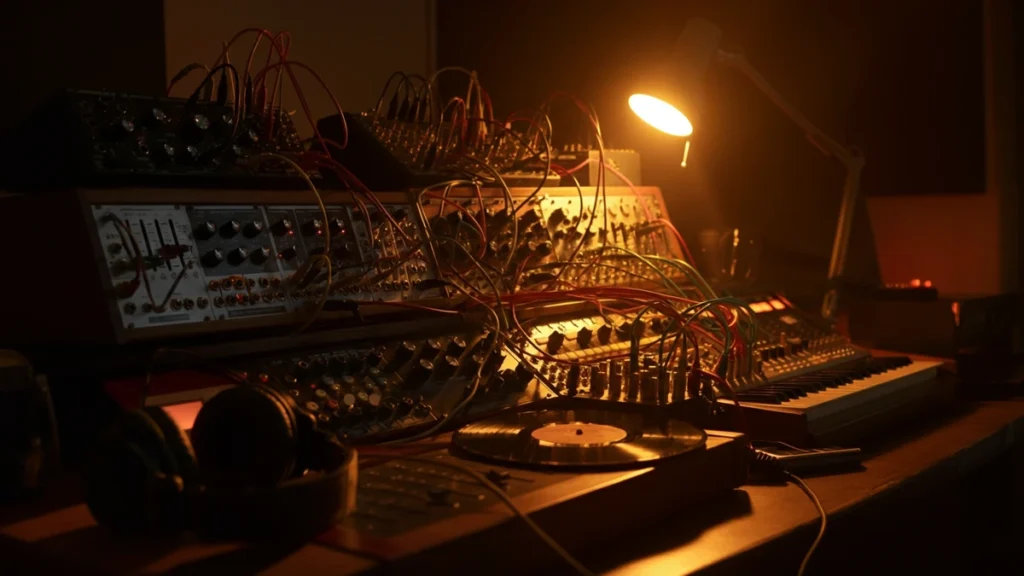
Analog modular synthesizer rig in a dimly lit home studio with patch cables, a vinyl record and headphones beside a small mixing console. | TopMusic.News - AI Generated
What Is Alternative Electronic Music?
In the vast universe of digital sound, alternative electronic music stands as a testament to innovation and emotional depth. This genre thrives in the spaces between mainstream music. Unlike its mainstream counterparts, which are often built for festival mainstages or dance floor climaxes, alternative electronic music is different. It’s a broad category. It includes everything from the cerebral soundscapes of IDM (Intelligent Dance Music) to the soulful introspection of post-dubstep. It also features the deconstructed club experiments of hyperpop. The common thread isn’t a specific tempo or sonic palette. Instead, it’s a shared commitment to pushing boundaries. It prioritizes texture and atmosphere over simple function.
The term itself is a catch-all for electronic music that defies easy categorization. This is music for headphones on a late-night bus. It’s also for quiet moments of reflection or intimate venues where the artist’s vision is paramount. It often incorporates elements from indie rock, ambient, jazz, hip-hop, and avant-garde composition. This creates a hybrid sound. The sound is as diverse as the artists who create it. This refusal to be pinned down is the very essence of alternative electronic music. It makes it one of the most creatively fertile grounds in contemporary music.
Pioneers of the Sound: From Aphex Twin to The xx
To understand alternative electronic music today, we must look back to its pioneers. In the early 1990s, artists on labels like Warp Records began to challenge rave and techno conventions. Aphex Twin was chief among them. His landmark album, Selected Ambient Works 85-92, showed that electronic music could be beautiful, complex, and emotionally resonant. It rivaled any other genre. Peers like Boards of Canada crafted nostalgic, tape-warped soundscapes. These artists laid the groundwork for a more introspective and experimental approach to electronic production.
Fast forward to the late 2000s. A new generation took up the mantle. The London-based trio The xx brought a minimalist, indie-inflected sensibility to electronic music. Their self-titled debut album was a masterclass in restraint. It used space and silence as powerfully as any synth pad or drum machine. Their stark, intimate sound blended hushed vocals with sparse guitar lines and subtle electronic beats. This resonated globally. It proved that electronic music could be both understated and profoundly moving.
The Modern Vanguard: Artists Shaping Today’s Scene
Today, the spirit of innovation is alive and well. A diverse group of artists carries it forward. They continue to reshape the boundaries of sound. James Blake emerged from the post-dubstep scene. He fused soulful, gospel-tinged vocals with fractured beats and deep sub-bass. This earned him critical acclaim. He influenced a generation of producers and vocalists alike. His work shows the genre’s ability to be both emotionally raw and sonically sophisticated.
Meanwhile, artists like FKA twigs and Arca push the envelope even further into experimental territory. FKA twigs blends delicate, intricate electronic production with avant-garde R&B and stunning visual artistry. She creates a holistic and immersive artistic experience. Arca is a visionary producer. They have collaborated with artists like Björk and Kanye West. Arca crafts challenging, often abrasive, and breathtakingly beautiful sound worlds. These works deconstruct and rebuild notions of identity, genre, and form.
The scene is also rich with producers. They have built dedicated followings through consistent output and masterful command of their craft. Artists such as Four Tet, Caribou, and Floating Points are celebrated. They weave together disparate influences into cohesive, compelling, and often danceable long-form projects. These veteran innovators continue to be at the forefront of alternative electronic music.
Genre-Bending and Mainstream Crossover
One of the most significant recent developments has been the subtle infiltration of alternative electronic music’s aesthetics into the pop mainstream. The line between underground and overground has become increasingly blurred. Pop superstars now adopt the textures, moods, and production techniques refined in more experimental circles.
The global phenomenon of Billie Eilish is the most prominent example. Her music, produced by her brother FINNEAS, uses minimalist arrangements, whispered ASMR-like vocals, and unconventional sounds. This directly connects to the work of artists like James Blake. Her work’s quiet intimacy and dark, atmospheric production showed that a pop song didn’t need to be loud and bombastic to top the charts. This was a lesson learned directly from the alternative electronic playbook.
The Influence of Technology and Independent Labels
The rise of alternative electronic music is inextricably linked to the democratization of music production technology. Powerful software and affordable hardware are now accessible. This has empowered a generation of artists. They can create complex, professional-sounding music from their bedrooms. They are free from the financial pressures and creative constraints of traditional recording studios. This environment fosters experimentation.
The role of independent record labels has been equally crucial. Institutions like Warp Records, Ninja Tune, and Hyperdub have been instrumental. They nurture and champion artists who don’t fit neatly into commercial boxes. These labels offer creative freedom and long-term artist development. They have cultivated dedicated communities around their rosters. They have also built reputations as reliable curators of forward-thinking music. They act as vital filters and tastemakers in a crowded digital landscape.
Where to Discover Alternative Electronic Music
For those looking to dive deeper, discovery is part of the experience. The genre’s nature is decentralized. Platforms like Bandcamp and SoundCloud are essential. They allow artists to connect directly with their audiences. They also provide a space for music that might be too experimental for major streaming services. Bandcamp’s artist-friendly model, in particular, has become a hub for vibrant communities and niche subgenres.
Influential publications provide critical context and curation. These include Pitchfork and Resident Advisor. They help listeners navigate the vast and varied landscape. Live session archives, most notably Boiler Room, offer a window into the club and live performance aspect of the scene. They showcase DJs and live acts in intimate settings around the world. Following these sources is a reliable way to stay on top of exciting new sounds as they emerge.
Stay Ahead of the Sound with TopMusic.news
The world of alternative electronic music constantly evolves. It is driven by technological innovation and boundless creativity. It remains one of the most dynamic and rewarding areas of modern music. This is true from its foundational pioneers to the modern vanguard and its surprising influence on the pop charts. To keep up with the trends, technologies, and artists shaping the future of sound, follow TopMusic.news for the latest analysis and industry insights.
About Author